Las Vegas, NV — Suitcase report
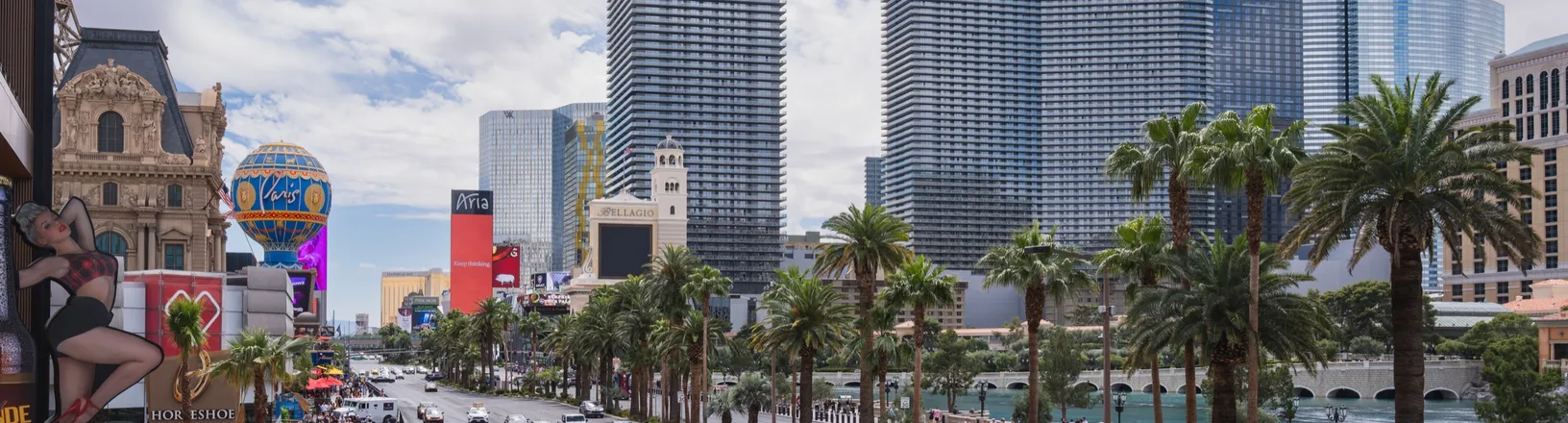
Sample report. Environmental scores, seasonal context and the data footer are the product’s own output for Clark County, NV (county FIPS 32003). It was generated on September 21, 2026 — the “Updated” date in its footer — and has not been updated since. That is not the date of the data: each source covers its own period, such as EPA air-quality records for 2015–2024, NOAA climate normals for 1991–2020 and the U.S. Drought Monitor reading for the week of May 26, 2026. The trip is an example, and the 7-day forecast is a NOAA/NWS reading captured on 2026-09-21. Ticking an item or rating a tip changes nothing beyond this browser. Photograph: Christian David, CC BY-SA 4.0, via Wikimedia Commons.
Pack Like a Local
Tailored to your destination, weather window, and trip type.
Must Bring
- Bring Comfortable dress shoes for walkingbusiness trip
- Bring Compact umbrellabusiness trip
- Bring Portable phone chargerbusiness trip
Recommended
- Bring Lip balm and extra moisturizerarid desert destination (very dry air)
- Bring Wide-brim sun hatarid desert destination (intense sun exposure)
- Bring Sunscreen (SPF 30+)highs near 98°F
- Bring Refillable water bottlehighs near 98°F
- Bring Sun hat or caphighs near 98°F
+ 3 more recommendationsShow fewer recommendations
- Bring Cooling towel and electrolyte packetshighs near 98°F
- Bring Reusable water bottleuseful in any destination and helps you stay hydrated
- Bring Comfortable walking shoesyou will likely be on your feet exploring
Active Disruptions
No active disruptions identified for your travel window.
Recent FEMA Disaster Activity
No FEMA disaster declarations affecting this area were identified within the last 60 days.
- Typically ~140 days/year reach 90°F or hotter, including ~84 at 100°F or hotter.
- Summer daily highs average about 103°F.
- Cooling-degree-days total about 3,503/year (a measure of warm-season cooling demand).
No active trip-impacting conditions were identified in the sources checked for this location and travel window.
Sources checked: Federal holidays, FEMA, National Weather Service, ReloEco environmental datasets
- 1Flood risk is low, indicating favorable conditions for visitors.
- 2Water risk is low, indicating favorable conditions for visitors.
- 3Wildfire risk is low, indicating favorable conditions for visitors.
- 1Heat conditions may require attention during certain seasons.
- 2Air Quality conditions may require attention during certain seasons.
- 3Verify current conditions before travel for best preparedness.